Payment service providers love TRON for one reason — it's where the USDT is.
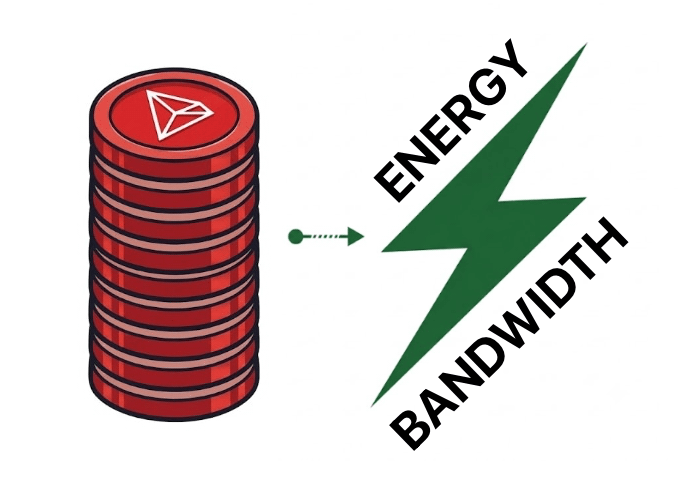
And they grumble about it for one reason too: every deposit sweep and every payout on TRON is a smart contract call that costs Energy, and at PSP volume, Energy turns into a real line item.
One infrastructure company decided to solve this at the platform level.
Fystack, an MPC custody stack built for payment gateways and fintechs, wired TronZap Energy renting directly into its wallet infrastructure. Every TRC20 USDT flow it processes gets Energy at rental prices instead of burning TRX at list price.
This article breaks down the problem Fystack was solving, how the integration works, and most usefully — how any PSP or exchanger can copy the pattern, whether they run on Fystack or on their own stack.
The problem: TRON at PSP scale is an Energy problem
A single USDT (TRC-20) transfer needs about 65,000 Energy — roughly 131,000 if the recipient has never held USDT. A wallet with no Energy pays by burning TRX: about 7 TRX per standard transfer, about 14 TRX to a fresh address at the current 100-sun Energy price. For a person sending USDT twice a month, that's pocket change. For a payment provider, multiply it by the operation:
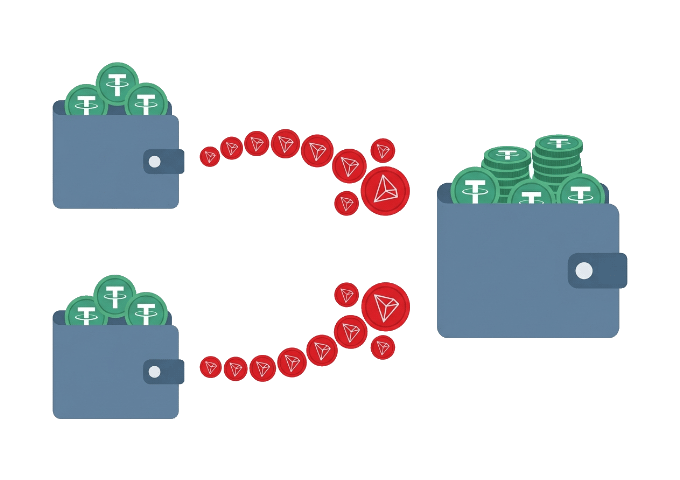
- Deposit sweeps. A gateway issues a deposit address per user, then consolidates incoming USDT into a hot wallet. Every sweep is itself a TRC-20 transfer — Energy again, thousands of times a day.
- Payouts and withdrawals. Every merchant settlement and user withdrawal is another contract call from a hot wallet that must hold Energy or bleed TRX.
- TRX pre-funding. The naive fix is to keep TRX parked on every operational wallet as burn fuel. Now the ops team runs a second treasury: monitoring hundreds of TRX balances, topping them up, reconciling them — and the network still charges the most expensive possible rate for every transaction.
At 10,000 transfers a month, burning means 65,000–130,000 TRX gone — capital destroyed, not spent on anything. That's the gap Energy renting closes, and it's exactly where Fystack plugged in TronZap.
Who Fystack is
Fystack is a custody and payment infrastructure platform built on MPC (multi-party computation): private keys never exist in one place, transactions are signed by a threshold of distributed nodes, and the whole stack can run self-hosted on a company's own servers or as a managed service.
On top of the wallet layer it ships the machinery a PSP actually needs — per-user deposit addresses, real-time deposit detection, automated sweeps, a policy engine with role-based approvals, webhooks, audit trails, and SDKs.
It's open-core, security-audited, and covers EVM chains, Solana, Bitcoin, and — since its v0.1.7 release in September 2025 — full TRON support with signing, transaction handling, and address validation.
In other words: Fystack is the kind of platform on which payment gateways, exchangers, and stablecoin fintechs run their TRON USDT flows. Which made the Energy problem impossible for them to ignore.
What Fystack built: a Gas Station with TronZap inside
Fystack attacked gas from two directions, and its changelog tells the story. In the v0.1.11 release (February 2026), the platform shipped a set of TRON resource savings — reduced Energy and Bandwidth consumption during sweeps and withdrawals on TRON. Then v0.1.13 (April 2026) introduced the full Gas Station toolkit:
- Gas Sponsorship. A per-wallet switch that funds gas just-in-time from a central workspace gas tank at withdrawal time — surfaced through a
FUNDING_GASwithdrawal status and awithdrawal.funding_gaswebhook. User and merchant wallets no longer need to hold TRX at all. - Auto Gas Refill. Threshold-based top-ups: the platform watches each wallet's native balance (TRX, ETH, SOL) and refills it from a gas-station wallet when it dips, killing manual top-ups for ops teams.
And for the TRON side specifically, Fystack announced the piece that changes the economics: the integration of TronZap Energy renting directly into its MPC wallet infrastructure.
The stated goal is to eliminate TRX pre-funding on USDT flows entirely — Fystack x TronZap partnership announcement puts the saving at "up to 60%" on TRON gas costs for high-volume operations, alongside their Gas Station overview. Instead of the gas tank burning TRX for every TRON transaction, the platform sources the exact Energy from TronZap, which delegates it on-chain to the wallet that's about to transact.
Same transfer, same reliability — a fraction of the cost, sourced automatically.
How the flow works end to end
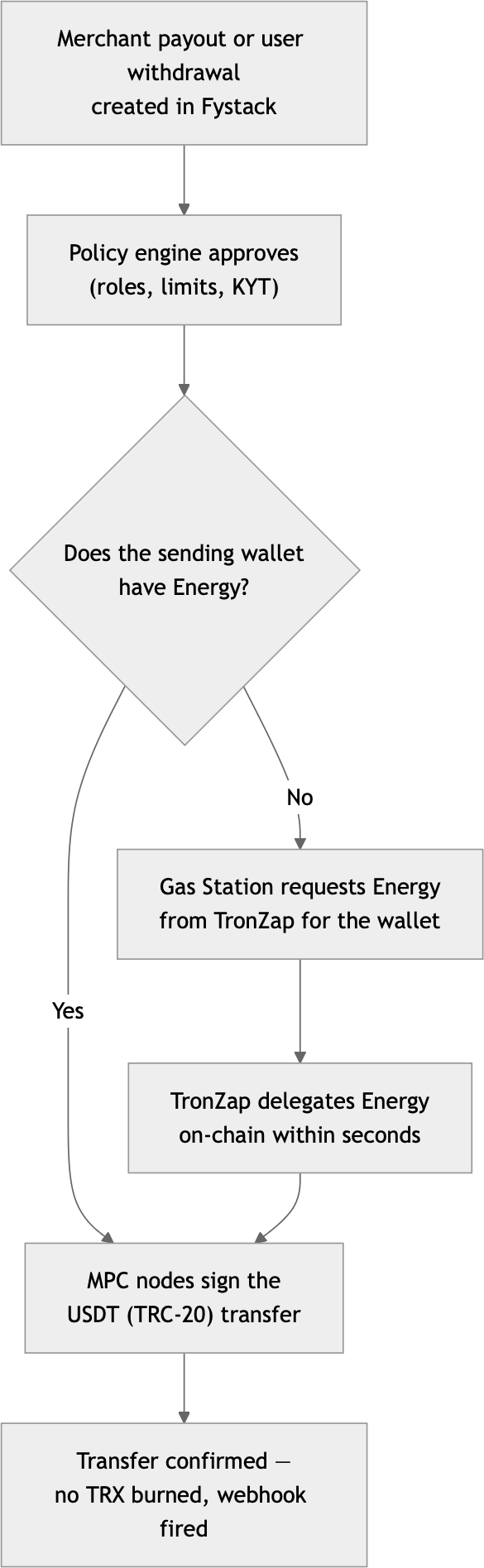
Note what's absent from that diagram: nobody pre-funded TRX, nobody touched a private key, and no ops engineer was paged.
The Energy arrives as a normal on-chain delegation to the wallet's address — TronZap only ever sees a public address — and the MPC cluster signs the transfer exactly as before. From the merchant's point of view, the payout just got cheaper.
Pre-funding TRX vs renting Energy: the PSP math
| Pre-fund TRX and burn | Rent Energy (TronZap) | |
|---|---|---|
| Cost per standard USDT transfer | ~7 TRX burned (≈14 to fresh addresses) | A fraction of the burn price |
| Capital parked | TRX idle on every operational wallet | None — pay per use |
| Ops workload | Monitor and refill hundreds of balances | Automated: API calls or subscriptions |
| Failure mode | Empty wallet → burn at full price or OUT_OF_ENERGY | Energy topped up before the transfer fires |
| Cost predictability | Swings with TRX price and recipient status | Known rental rate, estimated per transfer |
Fystack's up-to-60% figure is their number for their flows, but the direction is universal: delegated Energy consistently costs far less than the TRX the network would burn for the same transaction, and the gap compounds with volume.
How to copy this pattern
If you run on Fystack
The work is done for you.
Enable Gas Sponsorship and the TronZap-backed Energy renting for your TRON wallets in the workspace, and let Auto Gas Refill handle the rest.
Details live in the Fystack Gas Station documentation and the release notes for v0.1.13 and v0.1.11.
If you built your payout stack in-house
You can wire the same logic straight into your backend with the TRON Energy API — it's the same service Fystack integrated, exposed over REST at api.tronzap.com:
POST /v1/estimate-energy— get the exact Energy your specific transfer needs (it accounts for first-time USDT recipients).POST /v1/transaction/new→POST /v1/transaction/check— buy the Energy for the sending wallet and confirm delegation before broadcasting the USDT transfer.POST /v1/subscription/start— or skip per-transfer purchases entirely: a subscription keeps a hot wallet at 131,000 Energy around the clock, monitored 24/7, cancelable anytime.
Official SDKs for PHP, Node.js, and Python wrap the authentication and error handling, so a typical integration is measured in hours. Requests are secured with a Bearer token plus SHA-256 signatures — see the TRON Energy API reference to get started.
Frequently asked questions
Does the PSP's custody security change when Energy is rented?
No. Energy delegation is an inbound, on-chain operation addressed to the wallet's public address. TronZap never receives keys, never signs anything for you, and can't move funds — in Fystack's case, signing stays entirely inside the MPC cluster.
Do deposit wallets need TRX at all in this setup?
Not for USDT flows. With Energy (and Bandwidth, if needed) delegated on demand, a wallet holding only USDT can both receive and send it. That deletes the entire TRX top-up workflow that PSPs traditionally maintain.
What about sweeps to addresses that never held USDT?
That's the ~131,000-Energy case, and it's why estimating before buying matters. The estimate-energy endpoint checks the recipient's USDT history and returns the real requirement, so cold-start addresses don't trip your automation.
The bottom line
Fystack's move is a signal for the whole payments industry: TRON gas is not a fixed cost, it's a procurement decision.
By replacing TRX pre-funding with TronZap Energy renting inside its MPC custody stack, Fystack turned the most annoying part of running USDT rails — fee management across thousands of wallets — into an automated background process at a fraction of the price.
If you're a PSP, exchanger, or wallet platform, the same building blocks are on the shelf: the TronZap Energy API, the SDKs, and subscriptions for your hot wallets. The burn is optional.
Back